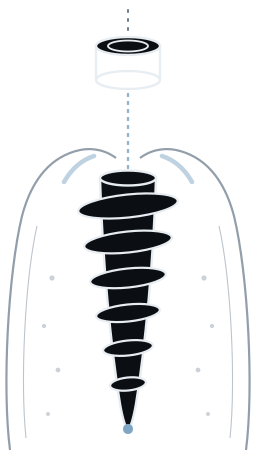
An upper arch on six implants, loaded the same day.
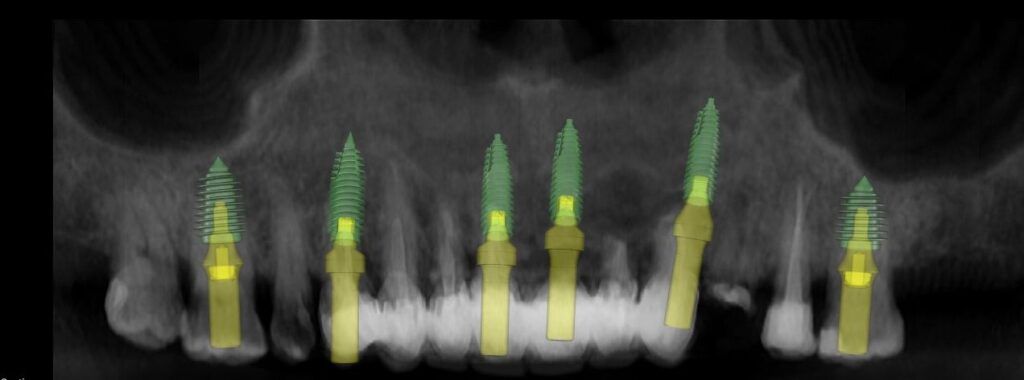
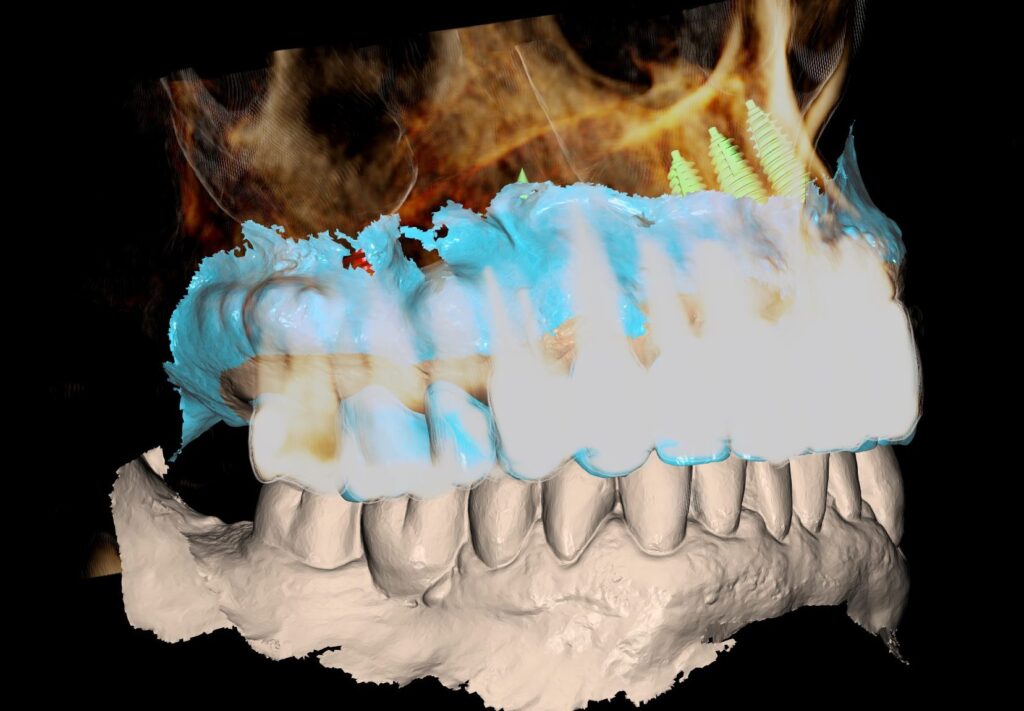
Six implants at 17, 15, 11, 21, 23 and 27 in a periodontally failing maxilla — placed flapless through a stackable protocol, provisionalised in the final design on the day of surgery, and now carrying the definitive work.
The case
A full upper rehabilitation. Severe periodontitis had left the standing maxillary teeth
mobile and a number of positions were already empty. As on
case 05, the arch could not be treated tooth by tooth: what
remained had to be cleared and the whole maxilla planned as one prosthetic unit.
What makes this one worth publishing beside case 05 is not the technique they share. It
is the two things that differ: six implants instead of eight, and two implant systems
chosen site by site rather than one system across the arch.
Six, not eight
Six implants carry a full maxilla when they are distributed to do it. The two second
molars anchor the ends of the arch, the two centrals and the canine hold the front, and the
second premolar closes the gap on the right. Everything between those positions is a pontic
on a splinted framework.
The count is a consequence of the plan, not a target set before it. Every additional
implant in a maxilla like this one is another position that has to find bone the periodontal
disease left behind — and a well-distributed six that all reach primary stability is a
better arch than an eight in which two are compromises.
Two systems, chosen by site
| Site | Fixture ref | System | Diameter | Length |
|---|---|---|---|---|
| 17 | FALIHX6010 | AnyRidge | Ø 6.0 mm | 10 mm |
| 15 | ARO3713DT | Blue Diamond | Ø 3.7 mm | 13 mm |
| 11 | ARO3713 | Blue Diamond | Ø 3.7 mm | 13 mm |
| 21 | ARO3713 | Blue Diamond | Ø 3.7 mm | 13 mm |
| 23 | ARO3713 | Blue Diamond | Ø 3.7 mm | 13 mm |
| 27 | FALIHX6008 | AnyRidge | Ø 6.0 mm | 8.5 mm |
The stack, and the guide that fixes the bite
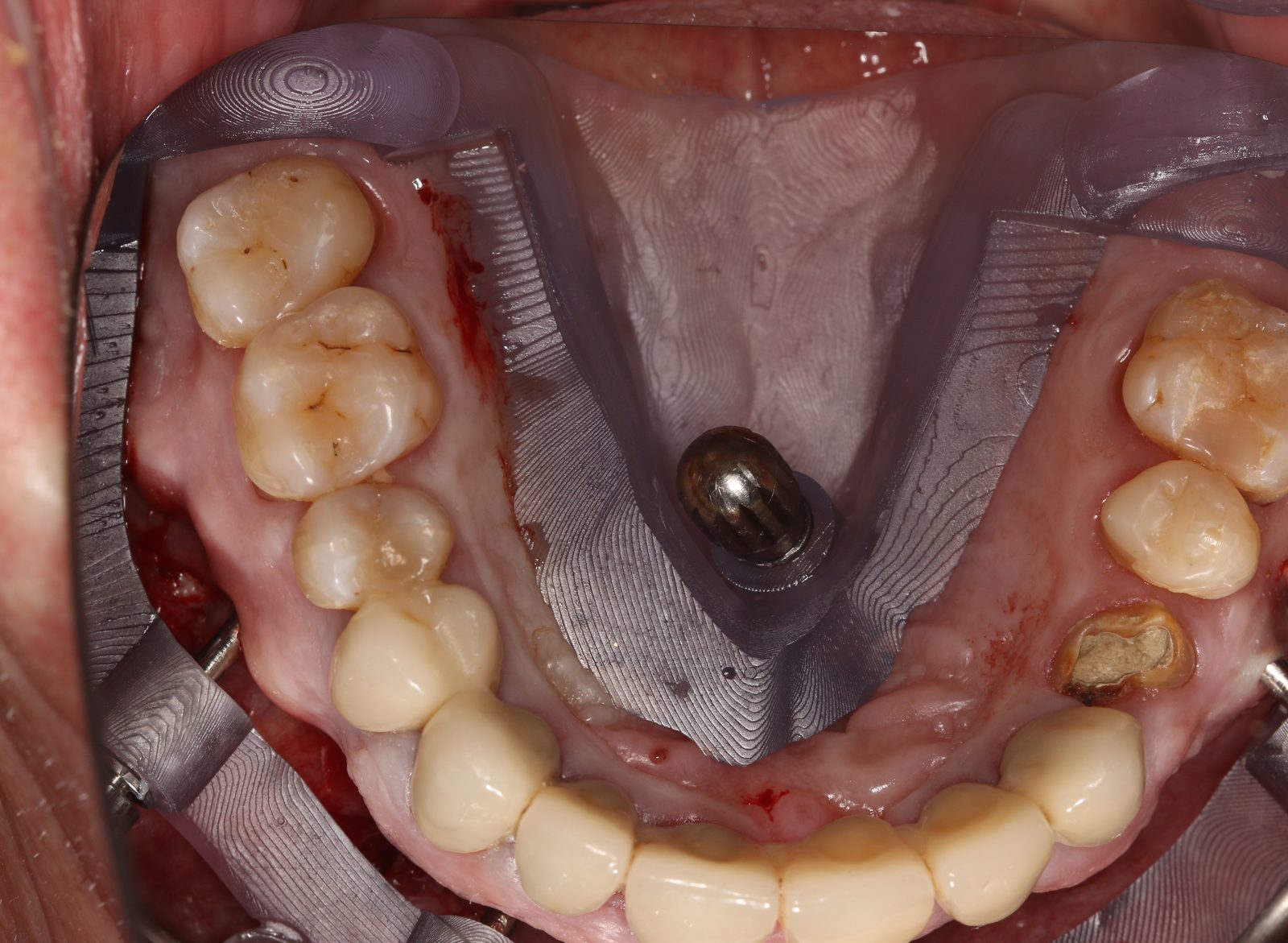
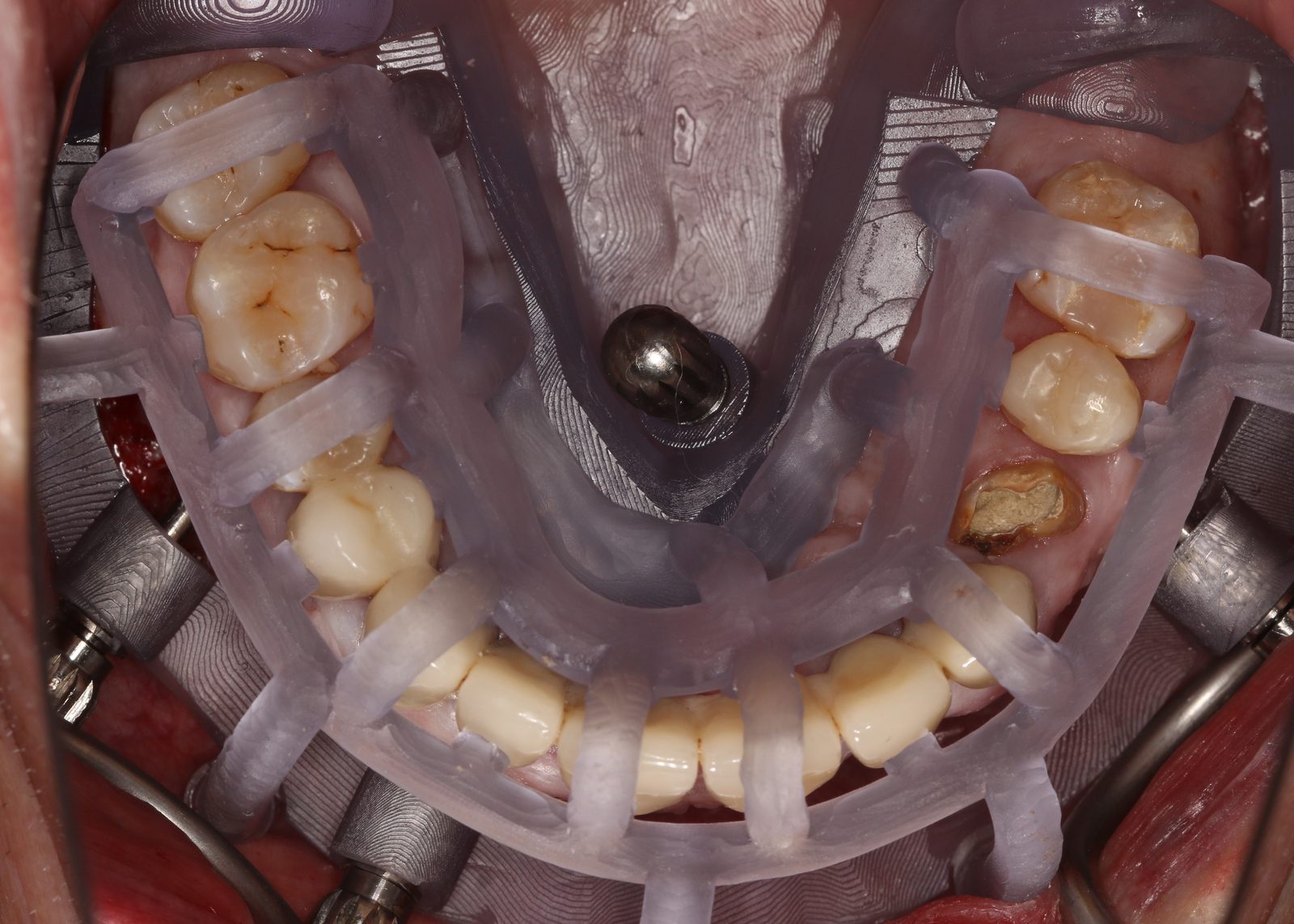
The protocol is the stackable one: a base seated and fixated first, the implant guide
stacked onto it, and every stage inheriting its position from the registration taken at the
start. The teeth were still standing when the base went in — which is the whole point.
The reference is captured while there is still something to capture it from, and it survives
the extractions.
This case adds a component case 05 did not need: a separate fixation guide whose only job
is to hold the occlusal position of the provisional to the plan.
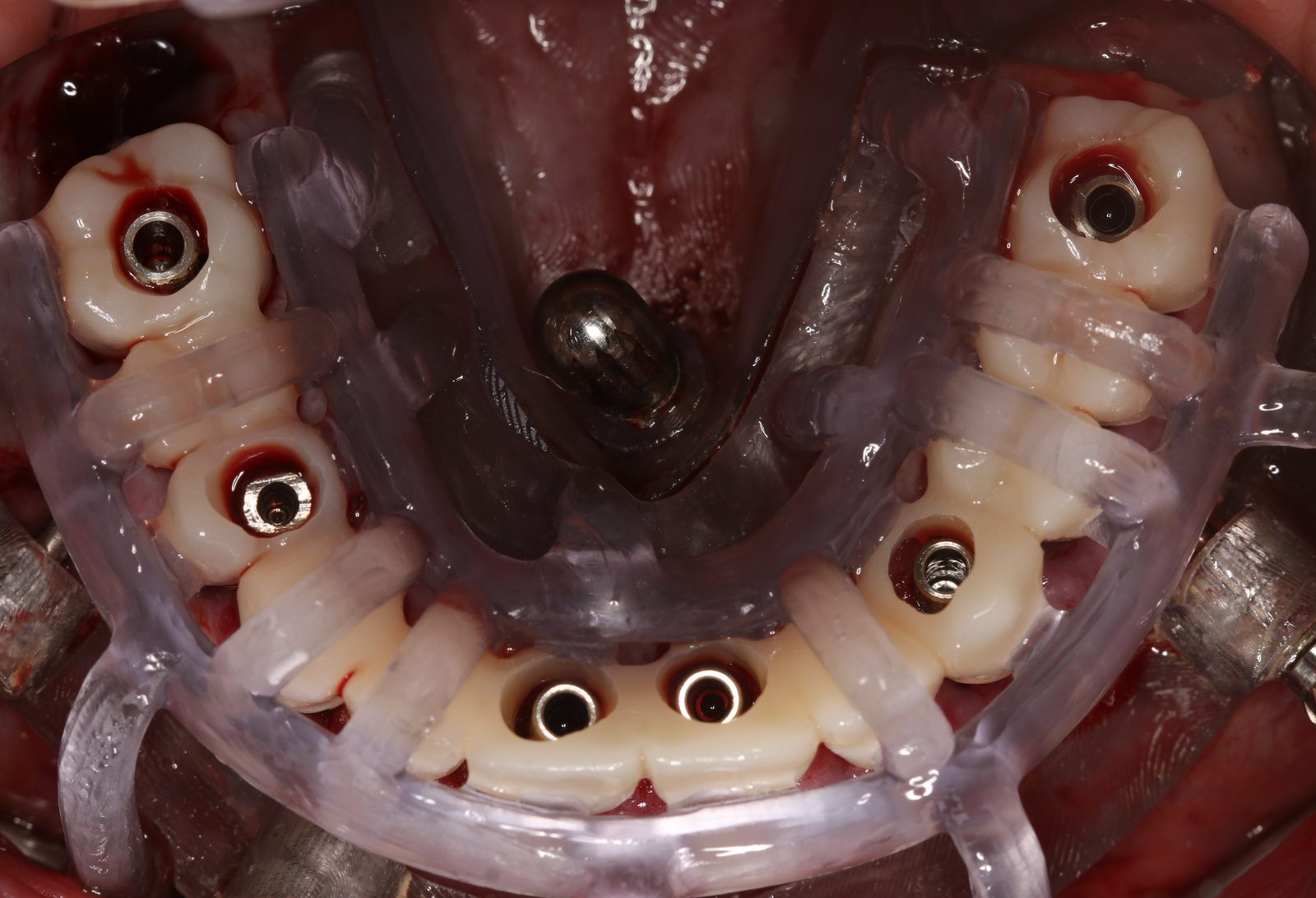
That is the step where full-arch immediate cases are usually lost. Getting six implants
into planned positions is a solved problem once the guide is pinned; getting the temporary
bridge seated at the vertical dimension and the midline that were designed for it, in a mouth
with no remaining teeth to check against, is not. A guide that indexes the provisional to the
same registration turns that from a chairside judgement into a component.
Flapless
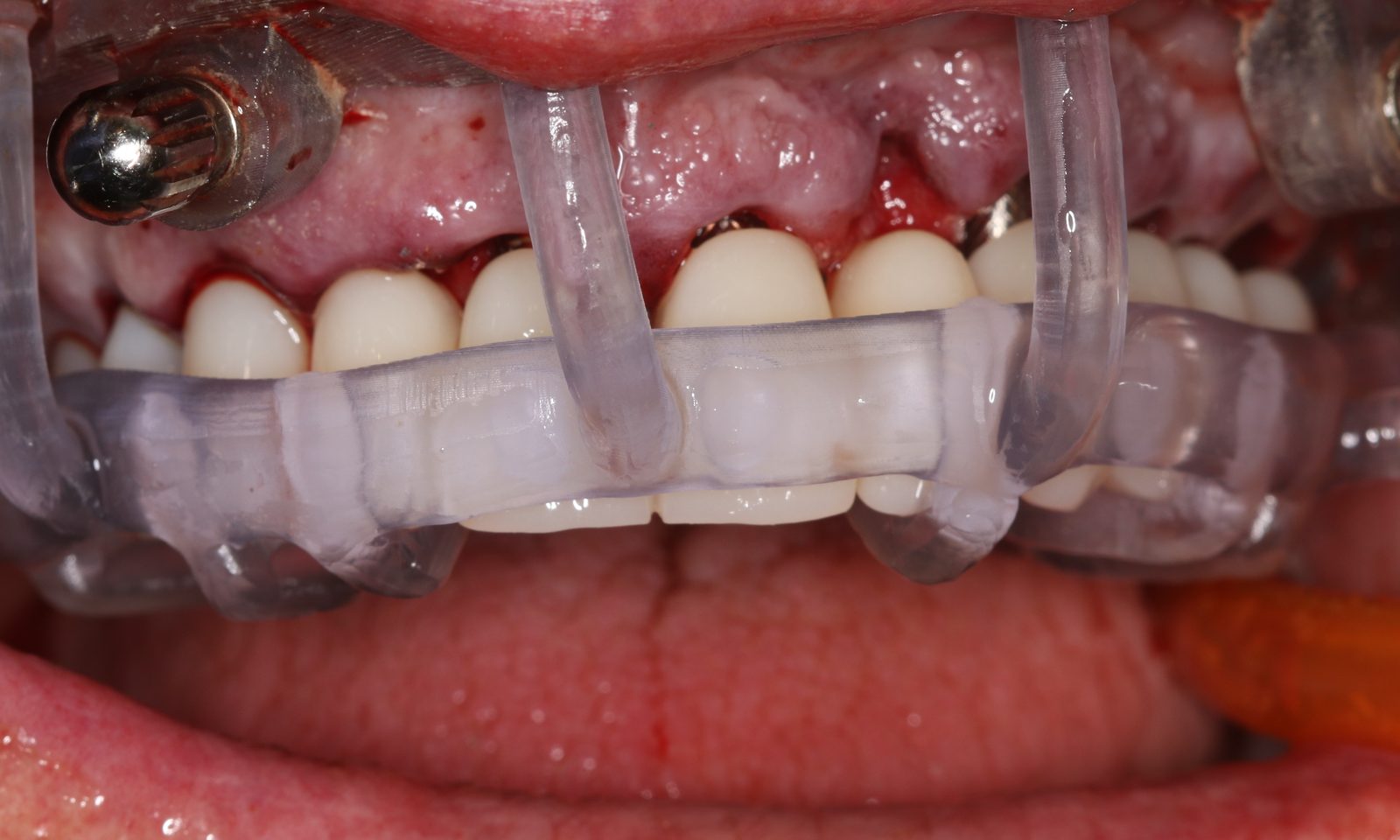
The extractions, six osteotomies, six implants and a fixed provisional were completed
without raising a flap. No incision, no reflection, no sutures — in an arch that had
just been cleared of periodontally involved teeth.
As on case 05, that is available only because the base is fixated rather than resting on
mucosa. Tissue compresses; a pinned base does not. Every millimetre of depth in the plan
survives to the drill because the thing holding the drill is not sitting on something soft.
Outcome
| Site | Insertion torque | ISQ |
|---|---|---|
| 17 | 110 Ncm | 93 |
| 15 | 68 Ncm | 83 |
| 11 | 71 Ncm | 91 |
| 21 | 65 Ncm | 89 |
| 23 | 78 Ncm | 81 |
| 27 | 120 Ncm | 94 |
The definitive work
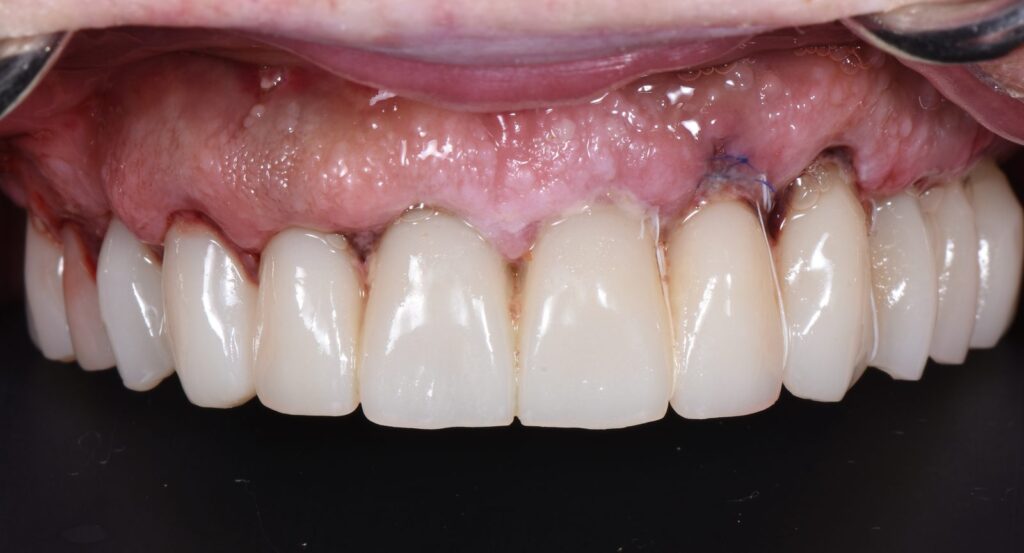
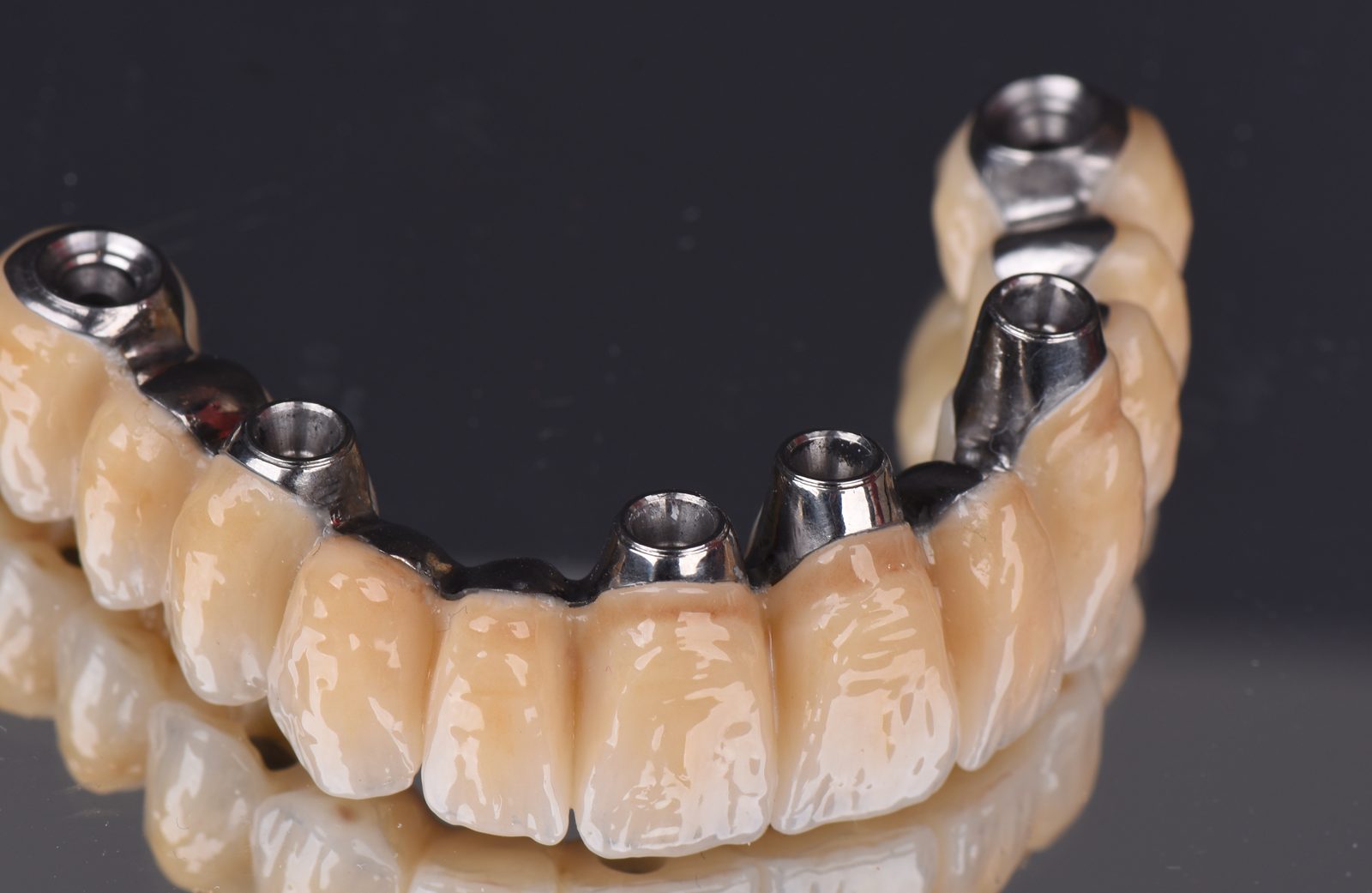
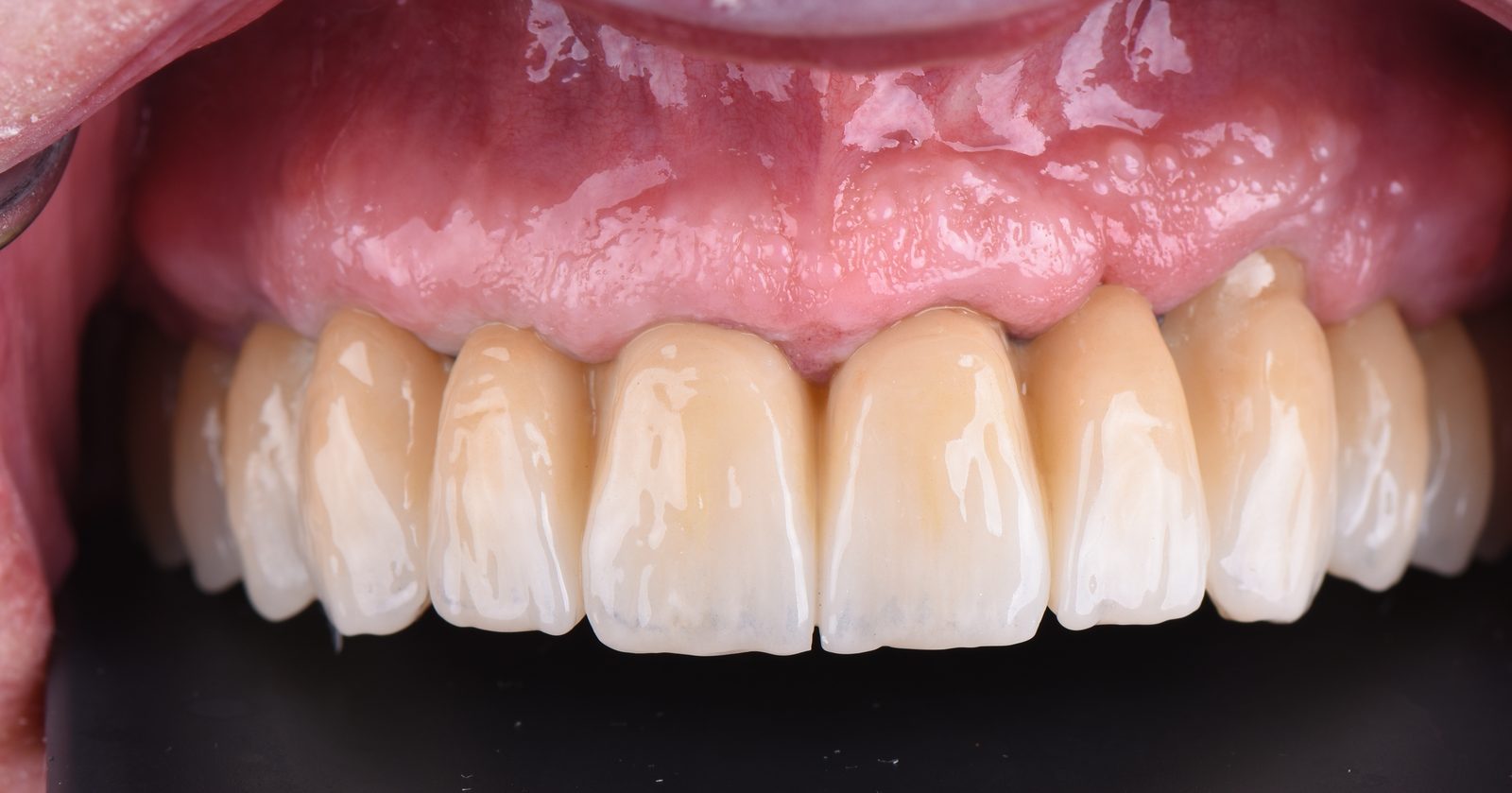
This is the case in the gallery that has been carried through to the end. The definitive
restoration is a screw-retained, implant-level framework across all six positions —
splinted, retrievable, and with the access channels placed where the prosthetic design put
them rather than where the implants happened to end up.
Which is the argument for the whole sequence, stated at the far end of it: the reason the
finished bridge looks like the plan is that the provisional did, and the reason the
provisional did is that the base never moved.
In one line
Six implants, two systems chosen site by site, one registration that survived the
extractions — and fixed teeth the same afternoon, in the design the definitive work
would eventually copy.