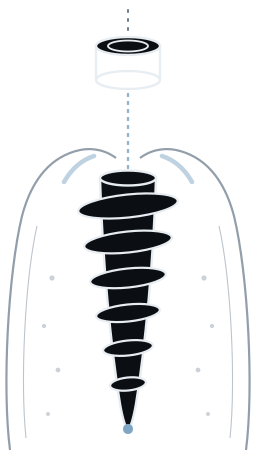
Two implants in the aesthetic zone, provisionals the same day.
Central and lateral incisor replaced through a tooth-supported template — with screw-retained provisionals whose subgingival profile was shaped in the laboratory before the surgery, not negotiated with the tissue afterwards.
The case
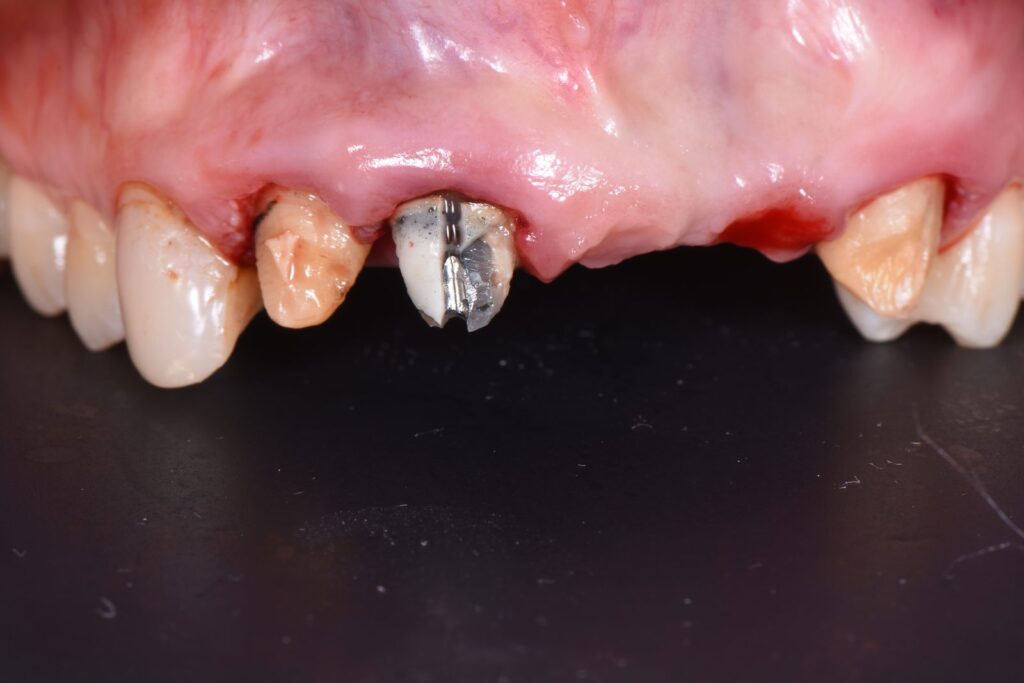
An upper left central and lateral incisor — FDI 21 and 22 — missing,
restored with two implants placed through a guide and provisionalised on the day of
surgery.
A healed anterior ridge is, on paper, the easy version of this problem: no socket to
take stability from, no extraction on the day, no fresh bone to protect. What it does not
remove is the part that actually decides whether the case succeeds.
Why the aesthetic zone changes the problem
Everywhere else on this site, the argument for planning is depth, angle and available
bone. Here it is different. The bone decides whether the implant survives; the emergence
profile decides whether anyone believes it.
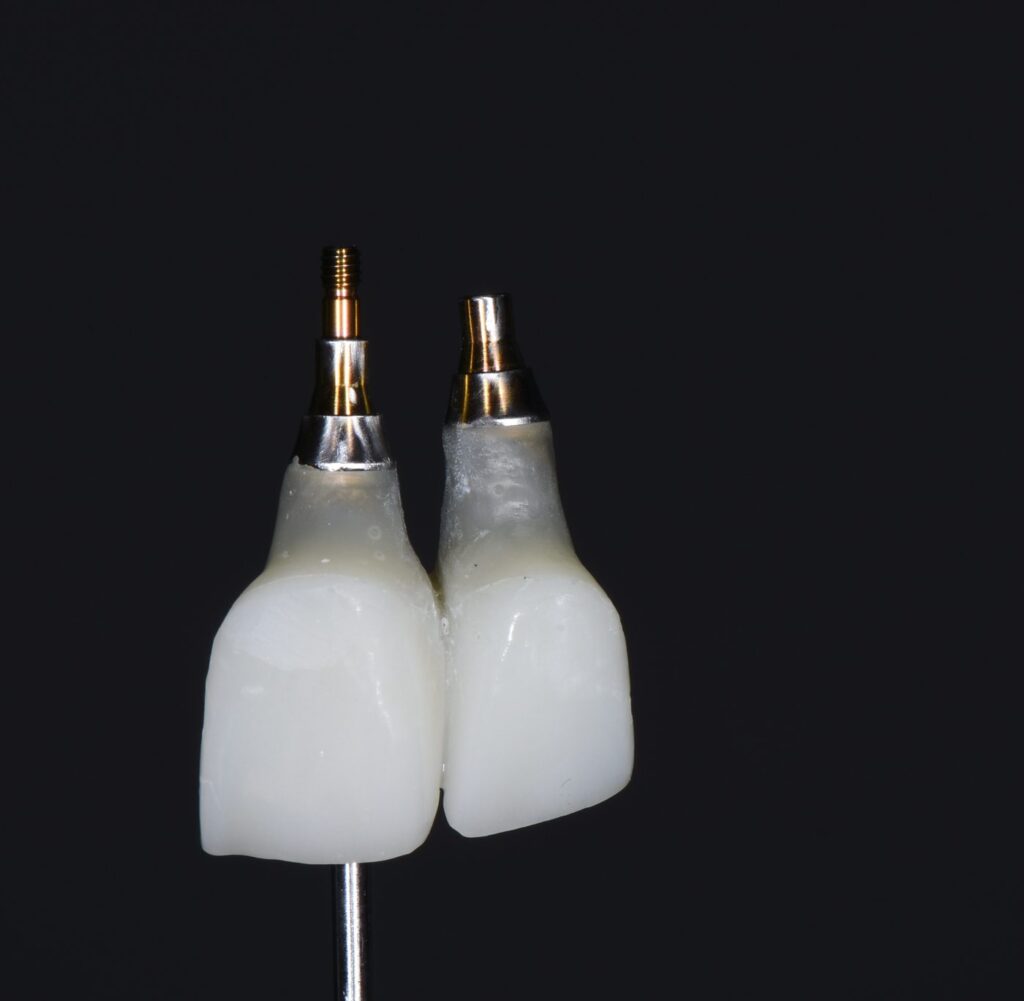
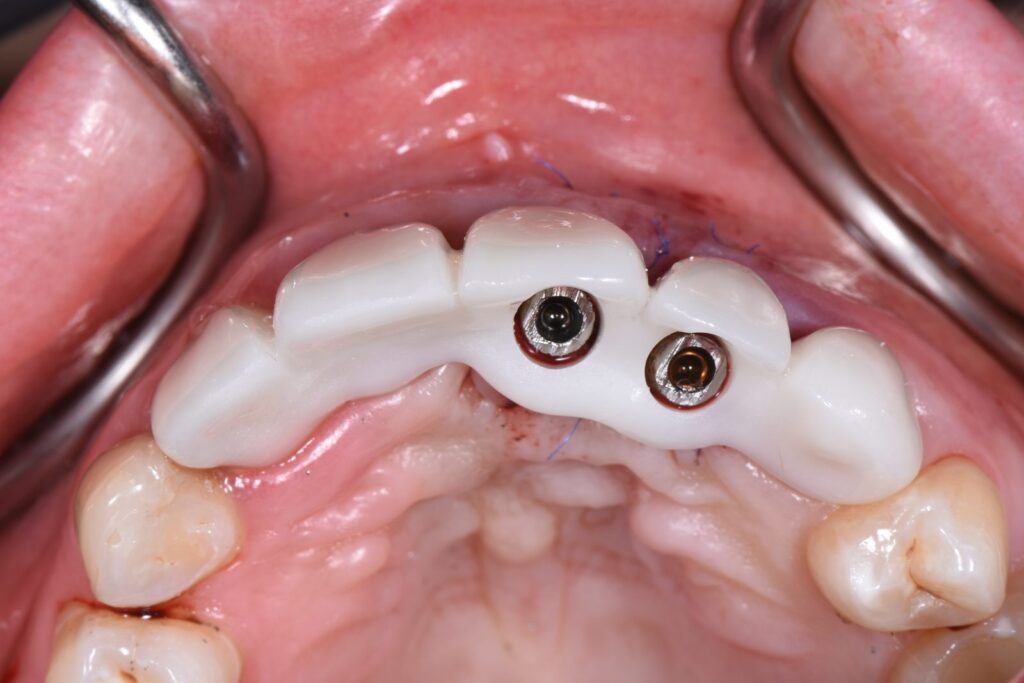
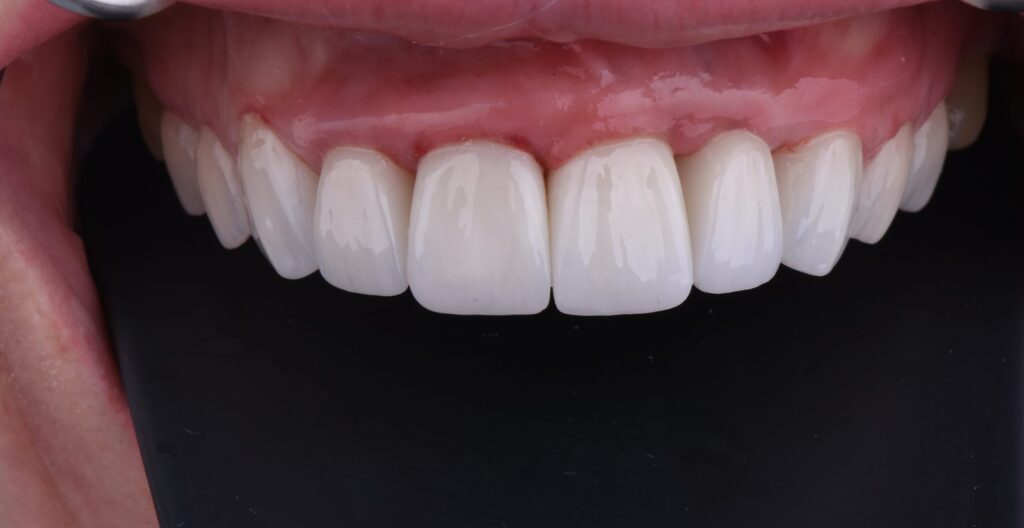
Which is why the most interesting object in this case is not the guide. It is the pair
of screw-retained provisional crowns on titanium bases, photographed off the mouth, with
the subgingival profile already shaped in the laboratory. They were made before the
surgery, from the same plan the template came from. So the tissue was never allowed to heal
into a shape that would later have to be corrected; it healed to the profile the definitive
restoration was going to want.
That is the same principle as the patient-specific healing abutment on
case 01, taken one step further — here the shaping
component is the provisional tooth itself.
The evidence supports this narrowly and honestly: trials of patient-specific versus
stock components at implant placement report better preservation of soft tissue volume and
papilla height and higher pink esthetic scores, with no difference in marginal bone level.
It is a soft-tissue argument, and in the aesthetic zone the soft tissue is the result.
Why this guide
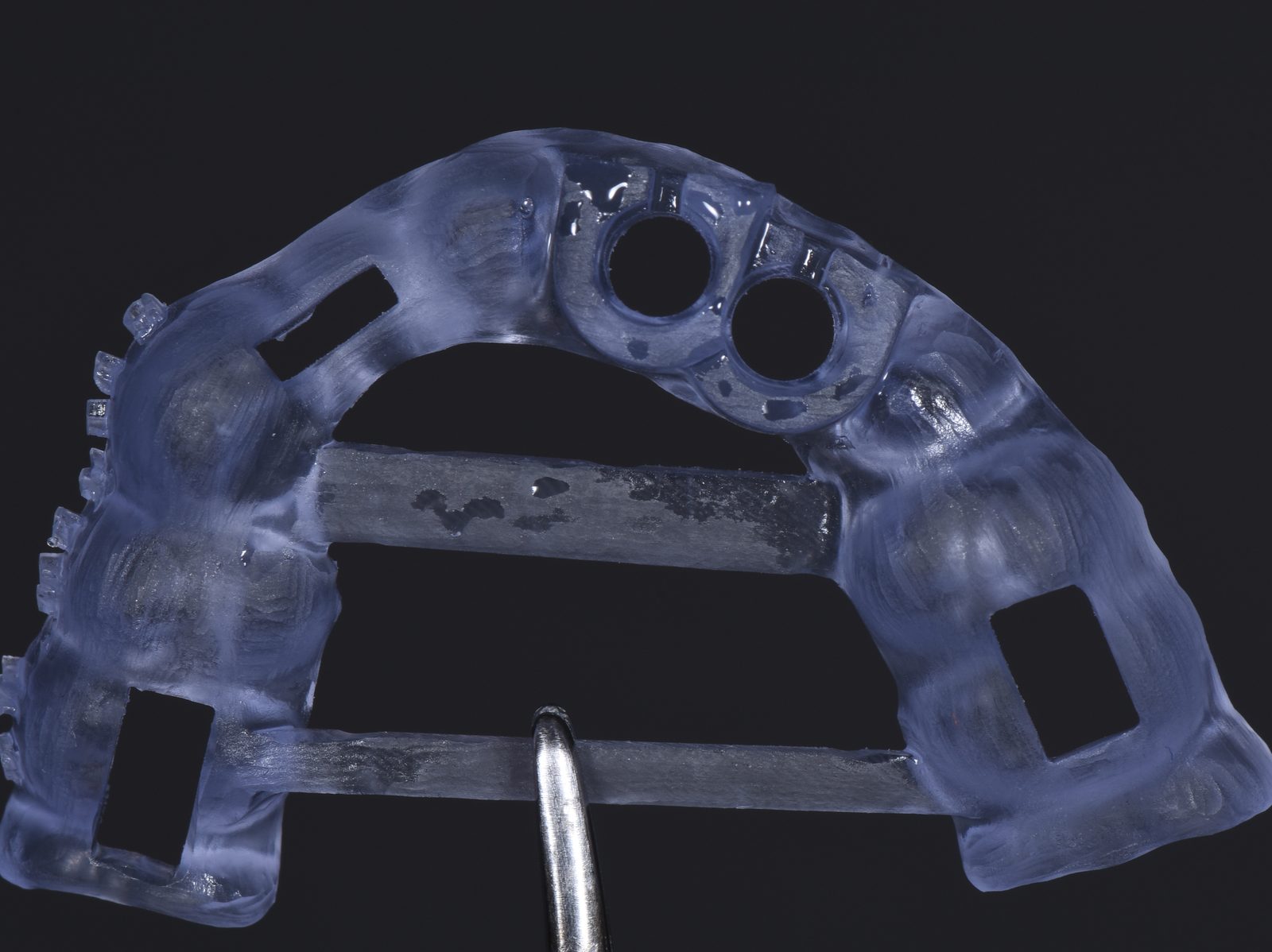
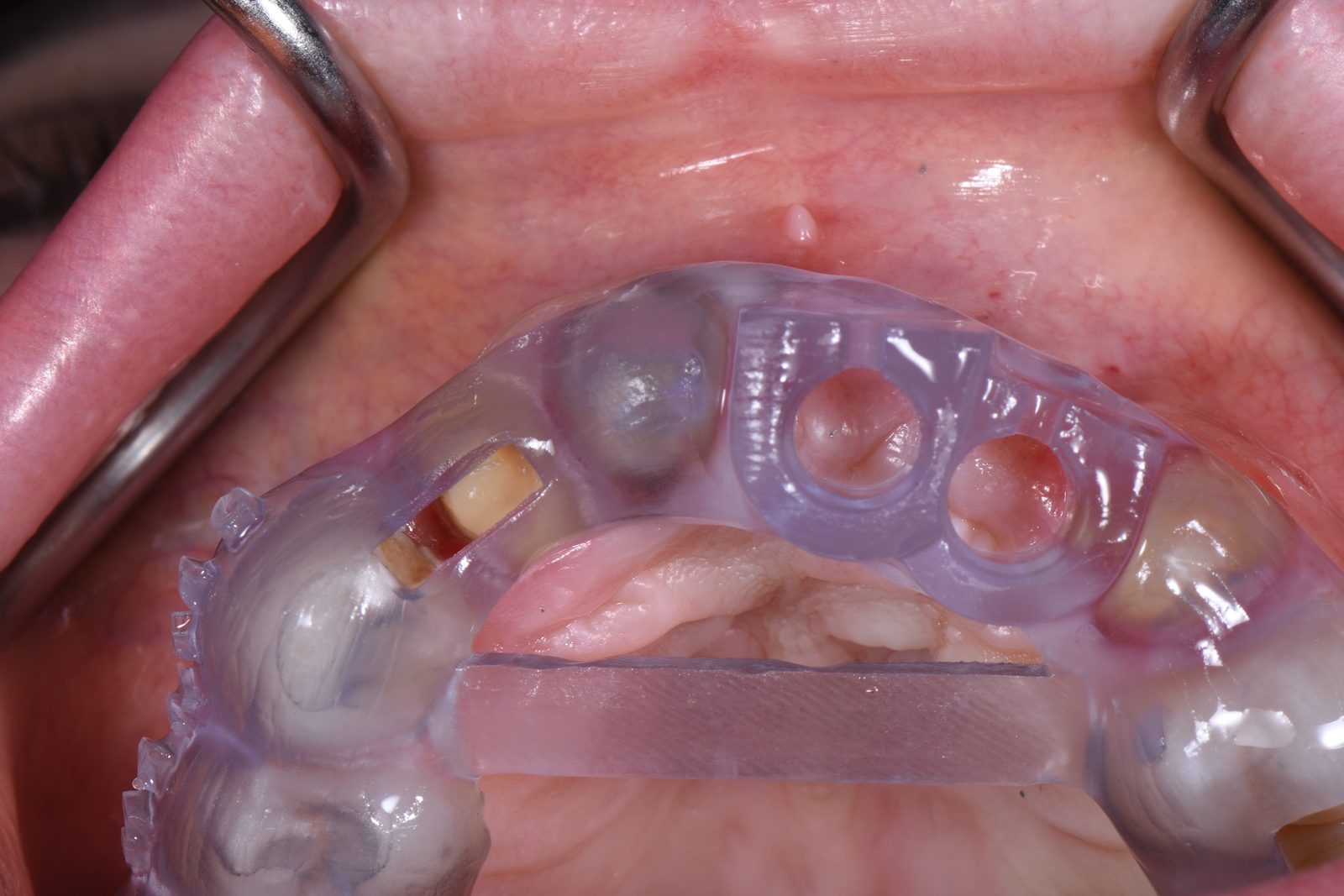
A tooth-supported template. In the anterior maxilla the adjacent teeth are rigid, they
cannot compress, and they sit immediately either side of the two sites — which makes
them close to an ideal reference. The template carries both sleeves and open inspection
windows, so seating is confirmed visually rather than assumed.
The surgery was flapless: the osteotomies were prepared and the implants placed through
the template without raising or reflecting tissue in the aesthetic zone, where the papillae
are the part of the result nobody can rebuild afterwards.
System and software
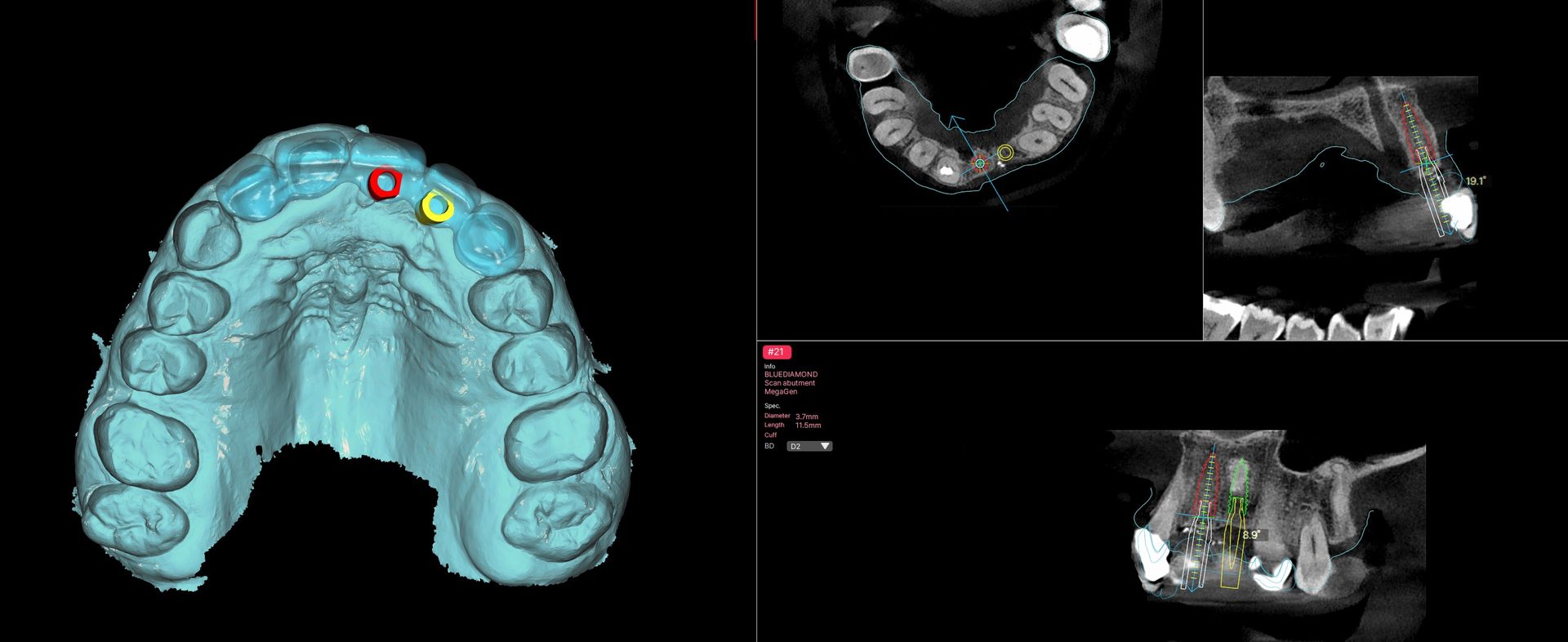
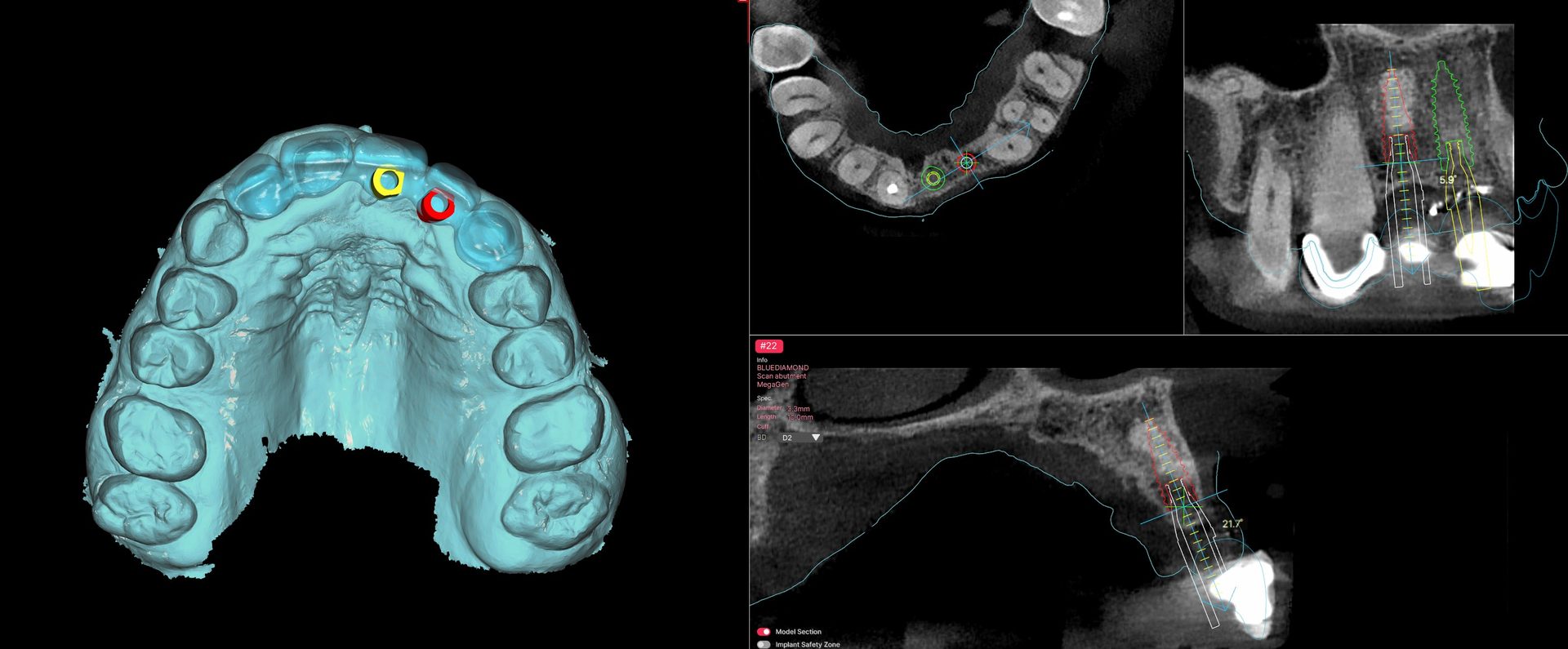
| Site | Tooth | Fixture ref | Diameter | Length |
|---|---|---|---|---|
| 21 | Central incisor | ARO3711 | Ø 3.7 mm | 11 mm |
| 22 | Lateral incisor | ARO3310 | Ø 3.3 mm | 10 mm |
Outcome
| Site | Insertion torque | ISQ |
|---|---|---|
| 21 | 71 Ncm | 91 |
| 22 | 65 Ncm | 85 |
In one line
Two anterior implants placed flapless through a tooth-supported template and loaded the
same day — with the emergence profile decided in the laboratory beforehand, because in
the aesthetic zone the soft tissue is the result.